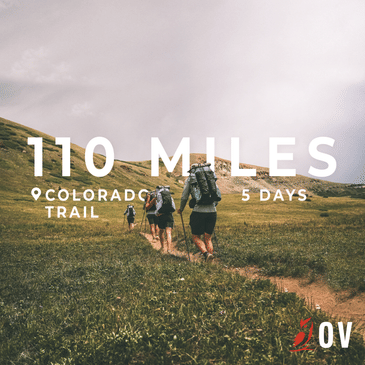
Every year we have the privilege of hosting the OV 100 Mile Challenge, a DIY challenge helping participants to get out and backpack 100 miles in one summer. Our team participates as well. This year, we did around 110 miles starting at Tennessee Pass on the Colorado Trail and ending at Buffalo Creek.
What we cover in this episode:
- An introduction to our new Design Assistant, Lucy
- A day by day account of what to expect on sections 4-8 (and some of 3) of the Colorado Trail
- Trail conditions on the Colorado Trail between Tennessee Pass and Breckenridge
- Highway noise on the Colorado Trail
- Footwear on the trail
- Best practices for blister and foot care on the trail
- How to optimize food space in your pack
- Pacing for a 100-mile thru-hike
- Headache prevention at over 10,000 feet
Chapters:
00:00 - Introduction to the 100-Mile Challenge
01:12 - Introducing Lucy 04:37 - Route Pivot Due to Fire
08:11 - Day 1 - Warning Signs (Early Injuries)
24:00 - Day 2 - The Mental Low Point and Highway Underpass Dinners
38:47 - Day 3 - Chasing Water Seeps and Shelter from the Storm
53:38 - Day 4 - Trail Magic, Soda Craves, and Hot Sagebrush Clearings
01:01:39 - Day 5 - Home Stretch
01:06:12 - Final Reflections and Takeaways
How to Submit Questions Have questions for us? Send us a voice message on Speakpipe: https://www.speakpipe.com/LiveUltraLight Or write in to support@outdoorvitals.com! Great Backpacking Gear (Support the Podcast): https://bit.ly/3PswpQi
[00:00:00] Hey everybody, welcome back to the Live Ultralight Podcast powered by Outdoor Vitals. Today we have our OV100 trip recap. So we were out on the Colorado Trail a few weeks ago now and did our 100 mile hike. We do that every summer as a team as a part of the 100 mile challenge. So if you don't know what that is, that's a DIY challenge that we've been hosting for five or six years now. I think this would be our sixth year where we just basically get a large group of people again.
[00:00:30] We give them a framework that allows them to kind of train and prepare gear and planning and all those kinds of things. It's a bit of a guide and then we all go hit the trail within a couple of months of each other and try to do 100 miles of backpacking. Some people choose to do that stacked is what we call it where they tie together multiple trips to get to 100 miles, but we've always done it as a non-stop effort.
[00:00:55] You know, we started doing these things when we were back on the Uinta Highline Trail, got that one completed. I did one on the Wind Rivers. We've done them on the Appalachian Trail. But lately we've been going through the Colorado Trail and trying to complete that over a four year period.
[00:01:10] So on the podcast though, today we have a new special guest besides Brigham here, but we've got Lucy, our newest designer to join us. This is also her first 100 mile hike. So Lucy, why don't you give us a little bit of a background on you since this is your first time ever being on the podcast as well. Yeah. How did you end up on the team here and what's your role here?
[00:01:35] Yeah. So basically Brigham and Tayson recruited me as a new graduate of the outdoor product design program at Utah State. Brigham graduated from the same program. And so as a graduating senior, we did a senior exhibit and kind of went around and found people who could be good candidates.
[00:01:54] And I got the position and I got the position and was very grateful to be part of this team, being a small team and just being able to get super creative and into the design and development process in this exciting company. So, yeah.
[00:02:14] So Lucy had a background in just sewing and her senior projects definitely stuck out to us, both me and Brigham and went through the hiring process, brought you on the team. You hadn't been on the team very long though. You started in June.
[00:02:32] You almost immediately went on a shakeout trip with the team that was about 40 miles or so and then joined us for the 100 mile hike in July. So not a lot of people can turn around and do 100 miles that quickly without maybe a little bit more, I don't know, people want longer planning preparation.
[00:02:52] So you definitely showed up capable, which is awesome. It's always a little nerve wracking for us to bring someone new on the trail because we have had to send people off the trail a few times. So there's a little bit of anticipation bringing it out there, seeing how things would go. Obviously, these guys were able to be at a shakedown hike with you. I hadn't. So this was my first time hiking with you. But yeah, it was exciting. Were you nervous about committing to come and do this or?
[00:03:22] I remember it was before I even had my first week. We had started scheduling things for the future and he's mentioning like, okay, there's this 100 mile hike. It would be very beneficial for you to come along being new to the team and also just new to the product.
[00:03:45] And I was like, okay, I'll start preparing now. So the next day I went with a friend to own a hike and we were just like, okay, I'm going to fully commit to this and it's going to be exciting part of the new job and started telling people about it. And they were all stoked for me. So I knew I needed to commit to it and actually do it. So yeah, it was good.
[00:04:10] That's awesome. So training went well for you coming into the hike. Did you, were you feeling prepared? Yeah. On the shakedown, I kind of twist my ankle a little bit. So I was really worried about that. But I just rested up, you know, a few weeks prior, just being super conscious about what I was doing. And I didn't have any problems on the trail. The only problems I had were just a few minor blisters, but everything else went away. So that was, that was big.
[00:04:37] Yeah. Awesome. So this year we were planning to go and do the West Collegiates. We had that all mapped out, had plans to do that. And then there was a fire that started a few weeks before we got out there called the Willow Fire just outside of Leadville over by, I think it was Turquoise Lake.
[00:04:56] And we realized that it wasn't going to be open for us to do that hike. So we had to pivot and we ended up deciding to just go up the trail and go from Tennessee Pass just outside of Leadville all the way to Buffalo Creek Trailhead or campground area.
[00:05:15] So that put us right at 100 miles on like mapping it out. Obviously, there's doesn't always work out to be that. It ended up being just a little bit over, but overall was just a good, like we had pretty good start and stop points, but we did have to make that pivot before we got started, which I don't know.
[00:05:37] I guess we'll, I guess we'll talk about, about that and how we felt about this section of trail and whatnot, but definitely fires were rampant here in Utah. We have had a ton of fires. Colorado had a ton of fires outside of Uray. They had a big fire going on the Willow Fire here. And yeah, it seems like more and more, if you're coming out West, you've got to be aware of the fire situation because it's, it's becoming a very, very common thing.
[00:06:06] But yeah, any, so I guess just jumping right into it. We, we drove out on a Sunday, plan to start on Monday and finish on a Friday and then head back home. Typical plan is to hike 20 miles a day and get it done in five days. That's kind of our MO. Some years we've had to do like 24 miles a day.
[00:06:29] We wanted to try to tailor that back. Um, we've had bigger groups out there. When you're trying to do 24 plus miles a day, it can definitely become challenging because things pop up as they did on this trail as well. And whether that's train injuries, um, thunderstorms or other things. So this year we, we really tried to keep it at 20 miles, um, which ended up being good.
[00:06:55] But as far as the outlook on the trail, it wasn't looking like it was going to be the most, um, challenging of all the mountain hikes we've done in terms of the total elevation gain and descend. Um, I believe we were around 16,000 feet of climbing and 20,000 descent. If I'm not mistaken, we had, we had a net loss of three or 4,000 feet.
[00:07:18] So that looked kind of good, but didn't know a whole lot about the trail conditions, um, before we got started, but, um, yeah, figured them out as they went and ended up being pretty good. So yeah, what do anything to add here before we kind of just dive into walking through the trail itself and how everything shook out any preparation thoughts? Um, I don't know, Brigham, how are you feeling last year? You came out sick this time.
[00:07:47] You're yeah, but last year I basically didn't even start. I, I had pneumonia and basically left the first day. So, um, I felt fine. So as long as I didn't have a fever and a painful chest cough, I figured that was probably a good place to start. And, uh, yeah, it was, uh, yeah, I felt, felt pretty good.
[00:08:11] Yeah. So we went out, slept in Leadville the night before, got up pretty early Monday and hit the trailer around, I'm going to say eight o'clock. Um, so that's, so starting on that side, we're starting at what's called Tennessee pass. Um, that first day we go up and over, um, one of the higher points for the trip, um, called Kokomo pass. And then we were going to drop down towards Copper Mountain ski resort. Um, yeah, walk me through day one for you guys.
[00:08:40] What were kind of the thoughts, how did things shake out? Um, things, things to note, I guess. Hmm. It was definitely, it was definitely warm. Um, yeah. It's interesting. I think there's, there's like general climate, like general rules that are pretty applicable in most places.
[00:09:05] You know, like you go up a thousand feet, you'll probably lose three to five degrees of temperature. Um, but there's also like regional climate differences where I feel like in Colorado, weather wise and temperature wise, what you would expect in Utah at 8,000 feet is basically the, what you would expect at 10,000 feet in Colorado.
[00:09:27] That's, that's what I've kind of concluded after a couple of years, you know, a couple hundred miles out there is that, um, in Utah, if you're at 10,000 feet, you can pretty much count on not really feeling hot, like not having hot weather. Um, but in Colorado at 10,000 feet is kind of more like 8,000 feet in Utah, where it's like, yeah, you could still be in the eighties. Um, and like feel very hot when you're, when you're hiking.
[00:09:57] And I'd say that's, that was pretty true this year, especially like day one. Cause we, you know, we started in the morning and we were right around like that 10,000 foot mark for a few hours before we went up over a pass. Um, yeah, I don't know. It's kind of something that was on my mind. It was definitely hot.
[00:10:24] And I feel like my thoughts on day one were that I had not followed through on my own advice would be the best way to say it. So, um, you know, I've, I wrote and helped write most of the, the framework and obviously created like the, the framework for, you know, training and preparation and have, you know, done a lot of these hundred mile hikes now.
[00:10:48] And this year I felt like I was just getting more and more complacent in terms of like training. I didn't do as much training. I had some other stuff going on. So I also didn't do as much, I don't know, just, I wasn't as thorough in my planning and physical preparations. And one of those ways that showed up on day one was I was wanted to try a new pair of shoes out. And so I had some, some topo, um, the, the trail venture force.
[00:11:17] And I had put about 10 miles on those shoes, maybe even less, but it wasn't super aggressive hiking in terms of like uphill downhill. I thought they felt really good and I just rolled with them because I wanted to try something new and it was probably three miles in when I started to notice a hot spot already on my foot by five or six miles into the day. I was pretty confident.
[00:11:45] I was going to be developing a blister and we stopped at a water source and I should have pre-taped the back of my heel because of that. Well, first off, I, I changed up the lacing and it did feel a lot better. I went to, it's called a heel lock and that's what I usually run on, on a lot of my trail runners. Um, but I just didn't do that switch early enough.
[00:12:08] And so it started on the blister and I didn't end up pre-taping like I should have when we filled up some water. And pretty much right after we left there, I was like, yeah, even though I changed up my lacing and it feels a lot better. Um, my feet are definitely not as tough as they've been in the past from lack of training and they've started on this blister. So I was starting to feel a blister develop pretty quickly on the trail.
[00:12:34] And I started kind of babying that foot to try to just avoid, um, creating a blister or making it worse. And I was just kind of limping along dealing with it because I didn't really want to stop and tape it, which was lesson number one for me was just, if you got a blister, like, or if you're feeling like you got a hotspot, stop and take care of it. And I kind of pushed through.
[00:12:59] And by the time we got to lunch, I pulled my shoe off and it was pretty apparent I had pretty sizable blister. And at that point I did tape it up, but the damage was done halfway through day one. And, um, so I kind of continued, I guess, to baby that foot throughout the day, which is, it was blistering on my left foot. So I was kind of flexing and moving that left foot less and trying to do more work, I would say, with my right foot.
[00:13:27] Um, which kind of came back to get me at the end of the day, which we'll talk about. But, um, yeah, coming up through that pass, it was definitely hot. We had a really nice lunch. Um, because we were only doing 20 miles, a lot of us felt like we could take bigger, sizable breaks. And so we took, I didn't, to my recollection, this was the first time that we like had lunch and we would take like a small nap after lunch.
[00:13:53] So we took, I don't know, maybe a 20 minute kind of just laid there in the shade, cooling off, digesting lunch. And, and some of us dozed off a little bit, um, which was super nice. And Derek and Caden were also out there on the trail. I should mention that. Um, Caden is currently up at PCT days, uh, running our booth and Derek's out of office today. So she got just up the three of us on there. But I remember Caden and Derek who were on the trail last year when we were having to do the 24 mile days.
[00:14:22] They were like, man, this is, this is nice. This is kind of cush. This is, and I kind of felt the same way, which was, which was nice. And that's, that's typically what we recommend in the framework anyways, is do 20 mile days. And that does give you some, some additional time. So that was definitely nice. We came up over, um, let's see, what was it called? Kokomo Pass and got to look down at, geez, what I feel like is the biggest mine I've ever seen in the mountains.
[00:14:50] Here, there's a huge, huge mine there that has displaced. I don't know how many hundreds or thousands of acres of, of mountain at this point. And it just looks like they're just continuing to roll in there. While it's something you don't always see, it was, it was really cool to see, uh, just like the water, like the, the big lake essentially that they've seemed to have formed down there is really blue, like turquoise blue. Um, but I don't know.
[00:15:19] I've, I've, I've never seen anything quite like that, that high up in the mountains. There's a big mine in Utah and Northern Utah, but it's not in the middle of what almost feels like what should be like wilderness area. Um. Um, yeah, it was weird. I mean, it, it was, it was just different. Uh, like when you come up over a pass that's, you know, 12,000 feet high, um, you know, it's all relative to like previous experience, you know?
[00:15:44] So like by the time, if I'm in the mountains and I'm at the point where I've hiked, I'm, I maybe, I don't know, what were we like, maybe 10, 12 miles ish into the hike. Um, you know, in my experience, I don't expect at that point in the mountains to then encounter, you know, to get up into a mountain pass and then look down at a big industrial. You know, whatever piece of land. So you could see like mining trucks going up. Uh, there's also a highway down at the bottom of that valley.
[00:16:13] You could see just cars driving by. So it is, it's definitely different and we'll get into like the route, um, itself, but it makes more sense when you understand the route. But, uh, it was, it was different, but it was still, that pass was very enjoyable because it did cool off. We got some cloud covers, some, a little bit of a breeze. It was, it was still pretty. I mean, it was really pretty up there. Yeah. Coming into this hike, we were really nervous about rain.
[00:16:41] Um, we knew that we had some big high exposed areas, especially the first couple of days and rain was forecasted pretty much every day of the hike. And usually when you're that high up in the mountains and there's rain forecasted, like you are going to be in the rain, like you're going to get hit. And obviously the big fear up there is not just the rain. It's, it's lightning. Right. So, uh, thankfully we got up and over that pass and down the other side without lightning being close. We got a little bit of a drizzle.
[00:17:10] We got cloud coverage, but didn't have any lightning to deal with that day, which I was definitely thankful for. So, uh, Lucy, how are you feeling? Kind of mid to second half of that day? Mid to second half. Um, we had obviously gotten to that pass.
[00:17:26] And so, um, yeah, we had a good lunch and I was, I was definitely not expecting the break just based off of the shakedown, but still being new to it all in the framework. Um, just kind of coming in with an open mind and being prepared for the upcoming days. And, um, so seeing all those things were, was exciting.
[00:17:55] And I didn't have like the frame of reference like Brigham knowing what the rest of the Colorado trail had been like. So, it was, it was just kind of, yeah, all new and exciting things and already getting a little tired and also being hesitant on the downhills we were about to encounter just because of my ankle situation that I was still being cautious about.
[00:18:18] So, but, um, yeah, really thankful to have that cloud coverage because the first part of the day was, was warm and I'm from Arizona. And so I felt like a wimp hiking in ageery weather thinking it was warm, but I mean, when you have a pack on and you're in direct sunlight, it was, it was warm. So. Yeah. Obviously starting on the trail, you got the most weight in your backpack as well. So climbing up that first climb was, was pretty hot, pretty exposed.
[00:18:45] So, um, coming on the other side, um, I feel like that's when, or maybe it wasn't quite then, but, um, talk to us about like your footwear and how your ankle is doing and things like that. Yeah. So I had been wearing shoes that I had definitely broken in. I've had them for, I mean, since the beginning of this year and I've been training for a marathon. So doing some trail running on those shoes, did the shake down on them. So, um, they're the lone peak eights.
[00:19:15] Um, so obviously like a very popular trail shoe, um, zero rise, pretty, not too much of a stack at all. So, um, yeah, pretty excited to really test them out. But at the same time, I mean, moving forward, I'm not sure if I would do a hundred miles on them or maybe my feet just need to be stronger, you know? So that was where I was at the beginning of the day, feeling fresh, but, um, a little nervous. Like were you getting tender footed or what do you mean by?
[00:19:45] Yeah. I feel like going on the downhill, um, pretty tender, just like really feeling like my feet were, were getting tired. Like the bottoms of your feet? Yeah. Just, just the bottoms of my feet. Not like painful, but definitely present. Ankle is doing good though? Mm-hmm. Yeah. Okay. So, so yeah, from there, I mean, these were obviously big, big mountains. So the second half of the day was really mostly downhill.
[00:20:13] Once we hit that pass, we just kind of cut down around the mountain, um, got some really cool views, saw a really cool cabin that was like totally off grade up there. Really nice cabin. Um, I'm not sure what the story is on that, but it was, it was, it was pretty spectacular. It was, it was, it was like a, it was roadless. Like there was no road, there was no road to it. Um, yeah. And it was, it was like right below the tree line, which was interesting.
[00:20:42] I think we were, I don't know if we would maybe have been in the boundaries of a ski resort. I don't know which one it would have been, but I don't know. So it's just up from Copper Mountain and they do have trails that go up to it from Copper Mountain. So I, I almost wonder if the ski resort manages it or built it and have had the lease or something like that. But it's public land with a really cool off grid cabin on it. So that was kind of cool.
[00:21:07] I haven't seen much of that out there and especially I haven't seen anything that, that like modern, you know, I'd like solar. It was like a multi-story cabin and stuff, big propane tank in there. And, um, yeah, just was kind of surprising, but also interesting to see that. And it was really pretty basin, but so yeah, the second half of the day, really just walking down off the mountain. And, um, things were pretty good.
[00:21:33] We got a little bit of rain, a little bit of drizzle and then, um, got into camp night one pretty, pretty seamless. Um, once we got camp set though, I had started to feel a little bit of pain in my right Achilles, which was strange to me. I, I often get tight calves and kind of have, I feel like are like chronically tight calves. Um, but not so much in my Achilles.
[00:21:59] And so as we were sitting around camp, I started stretching and I put my, my, uh, right foot up on a rock and just kind of lean forward. Like you would just stretch your calf out. And I was stretching not even that hard. And I heard a pop and my, my leg kind of shifted forward and, um, followed by immediate pain and then some swelling. And so I had, I popped my Achilles essentially on the end of day one. And I wasn't sure really what that meant.
[00:22:28] And, um, cause I, I mean, I could tell it wasn't a full tear. I still had function and could move it, but I don't know. It was, uh, definitely a concern as I went to bed on, on night one and was really interested to see what things would feel like that next, that next morning. But, um, yeah, any other thoughts on, on day one, anything else worrisome, bothersome? Um, I don't know.
[00:22:58] I mean, on my end, yeah, nothing like worrisome, you know, no issues. It was, I felt like it was a really pleasant, uh, just last couple hours of the day. It was just gradually downhill and had some clouds, a little bit of rain. So it was, it was not hot, which was appreciated for sure.
[00:23:20] Um, no, I think my only thing was, uh, no, because of all the, the, the little bit of rain, I was just looking ahead and thinking like that, that definitely meant that I'd have some condensation, which I'm always thinking about stuff like that. So, um, but no, it was pleasant, pleasant evening. I think the one surprise to me just at that camp was we could hear noise from I-70. So major highway coming through there.
[00:23:49] Um, even though you felt like you're out in the mountains, like you could still hear car noise essentially all through the night. Not always, but it was, it was definitely there. Um, because we were also just a little ways outside the boundary of Copper Mountain Ski Resort. And so not far from, from the 70. Anyways, I woke up the next morning and yeah, broke camp, got out of camp and started basically downhilling all the way down through the ski resort and on.
[00:24:18] Um, my Achilles was definitely sore. And again, I, I don't know. I think I, what I kind of, where I went with it mentally was like, well, let's just see what happens. Like, let's just push forward, see what happens, see if it gets worse. Um, I could walk, I could do things, but it, it hurt a lot to essentially use my calf. Like if I was pushing off with my toe, um, that's what caused the most pain. So initially it was all downhill.
[00:24:47] And so there was little need to use the calf. And so, um, yeah, was concerned, but was able to just, uh, the thought process for me, it was like, all right, we'll just, we'll just ride this out and see what happens. Got down off the mountain there, chose not to go into Copper Mountain or anything, you know, we're only one day out. So I didn't feel necessary, I guess, to make any unneeded stops. Um, so you go down there, you kind of cross the skiers or across the highway.
[00:25:14] And then we started to climb up to what would be the high point for us on the trail. So the next, uh, probably five to six miles were just, just up very much up. Um, I ended up a little bit more shy on water than I wanted to be at one point, but it was, it was also quite hot. Um, and quite a, quite a few people were passing on the trail as well.
[00:25:42] Um, some, some through hiking the CT, some day hikers, even some, some horsemen. So, um, yeah, I don't know. I mean, other than that, it was, it was still going well. I knew though, at that point, as we started to climb, that I wasn't going to be able to climb at the same rate. I was trying to use my left calf as much as possible at that point, taped up the blisters. And to me, I guess blisters are, they're pain, but they're not, but they're superficial pain.
[00:26:10] So like, and then the blisters weren't so much a bother. So then I kind of shifted back to that left foot. But I think that might've been part of why I tore some of that Achilles, um, was my use of my right calf and trying not to use my left foot the day previously. I think that that had built and fatigued my right, um, leg more. And so that was part of it. The other part of it, going back to what I initially said was I didn't follow my own guidance.
[00:26:39] I wasn't getting in as many miles and training as I should have just my fitness level just wasn't where it's been in the past, which was a bummer because, um, felt that pretty quick on the trail. So, um, so yeah, climbed up and got to the top of this pass, um, which was, which was an interesting pass. I mean, the high point was really cool, super windy as soon as you crossed over the top.
[00:27:07] Um, but it was different because as you were up there, different from like the San Juans and other areas on the trail we've been so far, because you could look down on one side and see Copper Mountain. You could look off the other side and see Breckenridge. Um, so while like you're high up there, you're disconnected, you're still just kind of sandwiched in between two cities, essentially. Yeah, it was, I mean, it was technically a pass, but the, the land formation that we were going over was just like a big ridgeline.
[00:27:36] I mean, it was, it was definitely, it was a mountain. It was over 12,000 feet, but, um, it was just kind of like a, I can't remember if that would have been running like north, south, but it's just a long, narrow mountain. Basically, you just had to get from one, the valley floor on one side to the valley floor on the other. So you just, the trail is just kind of like a giant, one giant switchback, just bump the mic, but just one giant switchback to get over the pass.
[00:28:03] And yeah, you just, you could hear, hear the highways all around and, um, but, uh, yeah, just had to get up and over that. Yeah. I, uh, I knew that we had a big climb that day, like early on in the day. So that was nice to know that it was earlier on. Um, but it was like, it felt straight up.
[00:28:29] And, um, because we were, you know, what I would consider being in civilization, um, I had like used a pit toilet because I'm like, well, it's here. I'm going to, I'm going to take advantage of this while I can. And so then I was kind of behind kind of the rest of the group. So I was there, I was not expecting so many day hikers and at this point in the trail. So that was interesting. I got a lot of people who were cheering me on as this little gal, I guess.
[00:28:58] I mean, they would be like, oh my goodness, you little, uh, lady, like good job kind of thing. And I was like, okay, thank you. And, uh, so that, that kept spirits high, but at the same time it was kind of, I think my biggest low of the trip just being in day two, like what did I just get myself into? But, um, once we hit the top of that, it was very satisfying. And I knew that I could really accomplish the rest of the trip.
[00:29:27] So that's, that's really interesting to hear kind of that perspective. Um, because yeah, like on the climbing side of it, we're just, we'll kind of, it'll, it'll manifest, I guess, if we go further through the trail, but it's interesting that that was kind of your low. Um, the climb itself, I want to say it was between two and 3000 feet. So, I mean, it was, it was a very significant climb. I want to say closer to 3000.
[00:29:53] Um, and it was, there's no breaks in it. I mean, it was just up and at different times it was steeper than others. And some of those like little punchy sections were like, holy cow, this is just straight up for a second. Yeah. Um, what do you think made that like the low for you? Like why that moment? Why that climb? Um, like where were you at mentally compared to maybe where you got to later in the trail? Yeah.
[00:30:19] Um, I think kind of feeling like I was in no man's land, like not surrounded by the rest of the team, which wasn't like a huge problem. It was just like, I think I had more time to just be in my thoughts, which, um, for better or for worse. But also like seeing all these day hikers who weren't doing a full trip and kind of getting in my head like, oh, man, what it would take to be them at that point. Like they're all fresh and perfumed.
[00:30:47] And they were just like, you got this, you're almost there. It's like the Grand Canyon. Yeah. That's also the worst though, is when they say you're almost there and you're really not. I know I'm not. And I wasn't like tracking my mileage on my watch at all. I was just kind of going along, which I feel like in the end helped a lot.
[00:31:05] But just not knowing like the end point, um, also kind of like having cell reception at that point, I don't think helped to me because I was just getting, I felt like I wasn't escaping the world to be in this experience at that point. Um, so I think that was a other thing that made a low point. So, yeah. But. Yeah, so I can pull up kind of our mileage as we went along in terms of the day.
[00:31:33] But, um, yeah, I feel like for me it was almost the opposite. I knew it was one of the harder climbs. And the fact that I was able to do it, I was like, okay, I'll be able to finish this with my Achilles issue. Um, but I will say I definitely kind of just had to settle into a pace that felt comfortable and, and it was, it was a hot section.
[00:31:57] And probably the worst part of that was by the time we got to the top of the mountain, that was lunchtime. Like it was time to eat. Like we had exerted ourselves well. It was really hot. But the second we got to the top, we could see rain clouds off in the distance that were coming our way. And, um, it was so windy and so exposed. It was so windy. And it was hot.
[00:32:21] So like we didn't want to sit with like no shade, no cover, getting hit by like 30, 40 mile an hour winds while you're eating. And so we decided like, okay, let's go off the other side and we'll just stop like as soon as we get to some trees. And that ended up being like another hour or so. So we got, I mean, we didn't have lunch till one or two in the afternoon.
[00:32:45] And it was definitely not, it wasn't good because at that point you could start to see more people kind of breaking down. In fact, when we rolled into the lunch spot, I was feeling bad because it's like, man, I really wish we'd stopped earlier. Um, you could see some of the energy of the group coming down. Um, I mean, was that the low spot for you when you like got into lunch or was it more so on the climb? I feel like it was more so on the climb, but hitting lunch late.
[00:33:13] I think because we knew there wasn't as good of a stopping point since we were up, up higher and we wanted to be in the shade and it was so hot. I did, I did feel it physically when we, when we stopped. Like I feel like mentally it was on the hill, but physically it was when we stopped for lunch. I made the mistake of kind of packing the same thing for lunch every day. And, uh, so yeah, it was hard to have an appetite since we were so exhausted at that point.
[00:33:44] Yeah. And, and you typically lose some appetite at altitude. I guess it's pretty common for people lose a bit of appetite at altitude, but yeah, we finally found some, some dwarf pines and we're all kind of just like shuttled under little corners of it. I kind of kicked out almost like a, like a game bed and we kind of got under there and it was, it kind of sucked because you, I felt like we really needed a good reset. But at the same time, it was not like the most comfortable place. It was probably the least comfortable place I had lunch. Yeah.
[00:34:13] I was going to say, I think it was the, like kind of the least desirable place we ever stopped. We ever stopped. Um, yeah, it was pretty views though. We were looking at some bases. It's really cool to see the tram or the lifts from Breckenridge and just how high up on that mountain they went. Like if that was something I had not personally seen, you know, I've seen some of the lifts, you know, in like Jackson Hole.
[00:34:40] I don't know how high those get, but I don't think anything really comes close to, for me, to what I'd seen in terms of like how high that, but lift got up to like 12,000 feet. And I imagine, I mean, the first thing I said to bring was how often do you think they have to close that lift down for wind, you know, cause it's just so high, so exposed. But it was pretty wild to see the resort go up that high, not necessarily right where we were at, but down the ridgeline a ways.
[00:35:06] Um, pretty, pretty, pretty cool to see if you're a big skier. I can see why people go to Breckenridge, I guess. Um, yeah, the rest of that day was kind of the same as the day before where we got over that pass and it was just a really long, really long ways down to cross the next highway. Um, right there by Breckenridge. Um, that one was like, felt a bit strange. Like I, I underestimated how long that really was to get all the way down.
[00:35:35] I think we kept, I kept thinking like, we'd be there, we'd be there, we'd be there. And the trail just winds and winds and winds. And this, something we haven't touched on yet is the trail conditions were really good. Um, like really good mountain, mountain bikable type trail conditions. And so, um, and part of that is when they have mountain bikes that are using these trails a lot and, you know, you got the Colorado trail organization that takes really good care of the trails as well.
[00:36:02] They really engineer them in certain parts, at least specifically this part where there's a lot of winding. So it's not like overly steep. Yeah. Uh, especially on that Breckenridge side. So we were just winding back and forth a lot and you add up extra miles. It's lower exertion, but it's time on feet. And so we eventually got down to the bottom of that, um, towards the evening around dinnertime, ended up having dinner underneath the highway under like an underpass.
[00:36:32] Under a bridge. Yeah. Cause you know, essentially on both sides of that, you've got people's houses, private property, stuff like that. And so we needed to get some water. There was some water. The trail crosses right under the highway under this, you know, underpass. And so we stopped there and ate right underneath the highway and had dinner. It was, um, something I have not yet experienced on a hundred mile hike was, was eating dinner, you know, 15 feet from a, from a highway.
[00:37:02] Um, so we had dinner, wanted to push a couple more miles and, you know, get up and out of the city, obviously to find camp spot. Um, but just wanted to get over that 20 mile mark. Um, so from there we started climbing up, um, the next, the next set of mountains, essentially. Um, did another pretty about four miles, found a spot we could, we could make camp at and called it a day.
[00:37:31] Um, yeah. Any other, other thoughts on, on day two? I feel like wrapping up day two after dinner, dinner really hit the spot. Um, and then that next little climb we did that evening was like very engineered, like you said. I feel like compared to some of the other spots. Um, and I kind of caught like a mini second wind at that point. Um, feeling optimistic for the next day. So it's like the, the turning point. Yes.
[00:38:02] Yes. Um, yeah, for me wrapping up that day, it was like, I think that was the day it was like, I realized like, yeah, I should be able to do this with the Achilles, but, um, there's, there's just pain there, you know? And it was kind of swollen up and, um, and whatnot. But, um, like really like setting up the tent, squatting down, doing those kinds of things is where it would really be painful.
[00:38:30] So there was definitely some adaptation. Setting up the tent was, became one of my least favorite things of the trip. But, um, overall it was a good second day. It was a bit draining, but, um, yeah, like it was, it was, it was solid. So, um, day three now. So we did 21 miles, both of the first two days, according like watch miles, I guess I'll refer to those as not, um, GPX tracked miles as much.
[00:38:59] There is typically a little bit of discrepancy when it comes to that. So, um, yeah, the 21 miles, both of the first two days, this next day, um, we knew that we'd have another high point to cross. So another, another climb to cross, but the, the layout was different. It was more gradual climb for more time throughout the day.
[00:39:27] Um, before we got to those, those high points and off the other side. But, um, the, I think that the only real exciting thing that happened in the morning was just that I, I drank through my water. I'm, I probably drink more than everyone else on the trail, but in our group. And so we weren't too far into day one when I was like, okay, I've drank through my water and this water spot on the trail that said that it was there was not there.
[00:39:55] And then that became a bit of a, uh, concern for me. Cause I was already feeling actually like I was behind on hydration. So it's kind of like, I'm already behind and now I'm out of water. Not sure what the next water is. The for sure next water was, was way too many miles ahead. So we ended up just using the map itself, not cause we were using far out, far out. It's really good to tell you when you're crossing water, but we ended up just kind of looking at the map and, and finding a spot where there could be water.
[00:40:25] Um, and then it was able to kind of drop down and find just a tiny little seep. And, um, essentially I ended up using my, my titanium cook pot to scoop the water and then pour it into a bag so that I could get enough water out of a little seep to, to filter. But I definitely felt a lot better at that point, having to cut the water and, and headed into that day.
[00:40:47] I think everybody pretty much kind of at least got a liter or two there because it was the, it was, I think like a 10 mile gap or 10 mile stretch of, of, of no water or to the next water. So yeah, it was, it was a good thing we stopped. Um, I'm kind of drawing a blank on what the trail was like after that for, for a while.
[00:41:13] I mean, I think we, you're just kind of a bit in the woods and just going up and down. I wouldn't call them hills, but, but smaller mountains. Yeah, milder. It was just like a lot of just, I'd say mild up and down, just climb kind of a smaller mountain and then go around it and go up another one, kind of go down the other side.
[00:41:38] It was kind of windy, you know, it's just like winding up and around mountains. Um, I don't know, like the, the morning hours were like pretty smooth sailing, just easygoing. I felt like pretty easygoing miles. Um, yeah. There was, there's some mountain bikers, like the trails were again, really nice in this section.
[00:42:04] Um, and because it's not too far from Breckenridge and those other areas, you could tell that there's definitely mountain bikers that come through and there's, there's connecting trail systems into there. So, um, it's awesome. Mountain bikers, awesome bay hikers again through there. And then, um, got down, had our lunch, another good lunch. Um, we were able to kind of take our time and then continued on.
[00:42:28] Um, one point we packed a, passed a pack of, uh, sled dogs. It was my, I mean, it had to have been sled dogs. It was just 50 huskies. Ranch or something. I would say. Yeah. Maybe, um, I want, yeah, I don't know. It was just like a sled dog, like dog sledding facility or just like a sled dog breeder, you know, or a kennel or something like that. Cause it was, there's a lot. You could hear them for miles.
[00:42:57] Like I heard, you could hear them way before probably at least a mile or two before I even actually saw the building and all the dogs. Yeah. Yeah. And then sometime after lunch there, we started the bigger climb up to another section of high country. And we started to finally get into some, some lightning and thunder.
[00:43:22] Um, but because we're in the trees, you couldn't, I mean, it's like we were seeing the lightning, but you're definitely, you know, hearing the thunder against the marine. Um, as we got closer to the high country, you guys had pulled off and stopped under a tree. And I had, I basically told these guys at this point that it was like on the climbs, I was just going to do my thing and I'd see him at the top or wherever. Um, so I caught up to you guys, you guys were kind of under a tree waiting to decide if we should go and cross the high country with the amount of, you know, lightning happening in the area.
[00:43:53] Um, and I think at this point too, is when to, to Lucy's point of the day previous, um, you, uh, you, you kind of threw down some, some miles there. Uh, Derek and Caden were like, yeah, we couldn't keep up with Lucy. You started sprinting up the mountain here and taking off on us on these uphills. And, um, so yeah, I mean, any, anything to say in terms of like what changed there, how you were feeling?
[00:44:20] Uh, yeah, I think I started to get used to how it was going to feel going up those hills. Also this part of trail on the uphills, it was, it was very, I don't know, just kind of windy. So it didn't feel as steep, um, on the elevation gain. Um, I was, I just ended up in front and I was going the pace that I thought everybody else was going in front in the past.
[00:44:47] And so I just started going and, uh, yeah, I, I don't know. I just kind of was in, in my thoughts. We had just eaten lunch around then feeling refreshed and, um, feeling motivated that this was kind of our, one of our last points of, of high country almost. Um, and so. Tree, kind of getting above tree line for the last time. Yeah.
[00:45:12] And so I was like, I'm, I'm just gonna kind of walk in and, and go and see what happens. And I was expecting everyone to keep up. I guess I felt like Derek and Kate, I mean, to be honest, they're not here to talk about it, but, uh, I feel like they had been going pretty fast in the past. So I was like, okay, I'm just gonna go. And, and Bergen was right behind me. So I thought I wasn't going that fast, but yeah, it felt good. I had fun. So. Yeah.
[00:45:41] Um, I feel like from the outside in here, like that there, there was a noticeable turning point and I would kind of describe it as. I think going out there and doing those first couple of days, there's the daunting aspect of like, okay, I've still got a hundred miles. And then there's, I think there's no real way around having some level of discomfort out there. Like everyone's feet will hurt to a certain point, you know, everyone's, you know, we'll, we'll get dehydrated.
[00:46:11] Everyone will feel hot to a certain point. Like, and I think, um, what it felt like from the outside in, and I want to hear your perspective on this is that we kind of got through those first two days and you got more familiar with like, this is just how it feels to do some of these, which, you know, it's, it's not uncomfortable, but it's not comfortable, you know? And it seemed like you kind of just accepted that and then just started like looking forward and just like cruising.
[00:46:40] Like you, you went over like a mental tipping point is how I viewed it from, from the outside in. Um, does that resonate with you at all? Yeah. I would say so. I think that was a really good way to put it. Um, also third day, knowing that after Wednesday there would be, you know, you're more than kind of halfway there. Um, yeah, it was all basically a mental game, you know, accepting that this is just how it was going to be and yeah, let's have some fun. So. Yeah.
[00:47:09] So thankfully we were able to kind of cut across that high country still in the trees while the last of any lightning was happening. And by the time we got to the real like exposed section where we went up over, uh, I believe it's called Georgia pass. Um, the rain had kind of cleared off and it was just pretty and it was really cool. And there's a, there's a mountain there called, let's see Mount Guyote. I don't know if I'm saying that right. Guyote.
[00:47:38] It's almost like guy out, but it's missing the U. Um, it's a 13,000 foot peak there and that, that was really pretty. So we ended up kind of taking our time, looking at that, took some photos and then we started dropping off the other side and we decided, uh, let's stop while we're still above tree line and have dinner. So we can also just look at these views and spend some time looking at these views. That was probably my favorite dinner of the trip because of the views.
[00:48:06] Um, it was just super pretty, cool temperature. Um, and it's also nice, like eating your dinner, knowing like that the next few miles before bed or are downhill miles, you know, like nothing too exerting. Um, so that was just a really, really enjoyable dinner, great views. And, and then we're tailoring off towards, towards the other side of, of Jefferson Creek there where we ended up spending the night. As we came over that though, I started going down the trail.
[00:48:33] So it was pretty clear to us that that side of the mountain had received a tremendous amount of, of water, whether that was like, I mean, from what we heard from other people later, like it, they were getting a tremendous amount of water that day. Maybe it was multiple days. I'm not totally sure, but the trail had, had definitely washed out in comparison to every other part of the trail that we were on.
[00:48:55] Um, so I was also just kind of sitting there, you know, being grateful that like we weren't on that side of the mountain when that other, um, storm had come through because we really dodged it yet again. The, you know, the, the center of, of some of these storms. So. Yeah, there were a lot of, I don't know, from there until the, throughout the rest of the trip, honestly, it was everywhere.
[00:49:20] Where we, most places we walked, it really looked like we had just kind of like been just behind the weather, which it was, it was nice because actually the, um, I remember the first couple of days were just like really dusty. And when it's hot and dusty, it's even worse. So I, I really enjoyed being able to like, just have a compact soil on the trail and just, it wasn't dusty. It was, it was pretty nice, but it definitely, you could just see like tons of debris just funneled down the trail.
[00:49:51] Pools of like pine needles and stuff like that. Or, yeah, it was, it was, um, it was really an enjoyable second half. Um, thankfully not like overly muddy either. You know, we got down, ended up, um, doing our camp at the bottom where there's some campgrounds. Like we were in the campground, but we were a little bit outside of them in that Jefferson Creek area. And on that day, um, I ended up tracking that we did 24 miles.
[00:50:18] So I ended up doing significant amount of miles that day. Um, yeah. Any other thoughts on, on day three? Who? Um, I don't know. It was, it was just nice to not be hot and the, and the rain and it was, it cooled things down, made the air fresh, made everything nice. But it was never really, nobody, you know, nobody was getting cold and shivery.
[00:50:47] It wasn't, we weren't exposed to it long enough that anybody was, you know, soaked to the bone. It just made the, the hiking nice. So I was, I'd say the second half of that day was really pleasant. Um, there was like a bit of a feeling of, for me, um, there was way less of my kind of terrain and scenery in this, in this whole trip.
[00:51:08] So I was trying to like appreciate and, you know, enjoy the, the bits of the trip, the, of the, of the trail that were, you know, really pretty in my, in my opinion. So I was glad that we kind of had like a bit of time at dinnertime to enjoy being up there, knowing that like for the next two days, it really wouldn't be like that. Yeah.
[00:51:36] We knew that this, the last 40 miles of this would be more so what we would consider out of the high country, you know, out of the, the tree line. It would be down in the trees, uh, for the most part. Um, so we, we definitely were trying to take that in and, and just mentally plan for the last 40 miles of this. Um, yeah. Anything else to add, Lucy? Um, I agree with Brigham on all of that.
[00:52:03] It was nice to have more of an established like campground area because in the past two days we've really been searching. Mm-hmm. And, uh, like when we got to it, we knew that that was the spot we were going to camp and falling asleep that, that night knowing that there was one more night on the trail. I was feeling great. I love camping. I like, I, I love all these things, but just knowing in this long hundred mile trek that there was only one more night. Yeah.
[00:52:30] As a process, like it's a, it's a defined process. So there, there's definitely a positive, uh, energy that comes from, comes from that for sure. The other, the other part that is nice is when you find a very easy campsite, um, because there's really nothing worse than having hiked 24 miles in the day and then be struggling to find a good spot to, to pitch a tent or level spot.
[00:52:55] Or there's always that concern of like, oh my goodness, how many more miles are we going to have to go to find a good spot? Or like, cause sometimes you just end up in a spot that's not a great spot to camp in. And so this one really level campsites, really quick and easy setup for, for, um, sleeping that night. So definitely a win, win there. Okay.
[00:53:16] So the next day, um, was where we, we would, um, head and go over Kenosha pass, um, which is not so much a pass for us hiking it as it is for the road system, the highway that goes through the pass. Yeah. Um, but it's a, it's a known destination. There's a campground there. Um, so morning, morning went really quite well. It rained on us throughout the night. So everything was a little bit wet in the morning.
[00:53:44] Um, it was misty, misty. It's kind of fun hiking through that. Yeah. That big, um, that big valley there was, was really pretty. Um, so like a 9,000 or 9 or 10,000 foot, um, big flat valley. And we kind of were skirting around the valley. Um, so I had some, some cool views, just different views. Um, saw some, some salamanders, you know, that would come out in the, in the moisture.
[00:54:14] Um, and then we, you know, just kind of continued on pretty easy, you know, hill type walking. And, and then got over to Kenosha Pass. And when we got there, we were, we were actually expecting to not have water for a good section of, of mileage there. As we were walking through the campground, you know, point or next to the campground, I pointed in and said, Hey, you can come get water down here. Went down in there and we're, we're getting some water.
[00:54:40] And a guy swung by and said, Hey, we've got, you know, some drinks or snacks. If you want to come over by, he was, he was a, a former past Colorado trail hiker who was now managing that campground. Camp Post. Camp Post. So as the Camp Post, he, he, we came down to his spot and had a, had a fun conversation with him and his brother. Um, they were, they were characters for sure, for sure. Um, but you know, got a soda, which is, I'm, I'm like a soda. I, I love carbonation.
[00:55:10] So that, that hit the spot for me. It didn't matter what it was. I was like, Oh, I really enjoyed that. Um, and we were able to dump some trash, you know, like our trash from, from the day, which was, which was good. Um, one interesting thing is when I went to dump my trash, I was surprised that it just didn't feel like there was that much. And one thing that every single person on this trip did this time is we all repackaged all of our like peak refuel meals, hydrated meals.
[00:55:40] And that, the amount that that cuts down on, on, um, weight and bulk specifically in your pack is, is really substantial when you're out for, for five plus days. So these guys, you know, we, we put our, our food in and, um, well, the, the best advice is to put them in a, like a microwave Ziploc, um, style bag, steamer bag. And it really does. It just cuts down a lot on, on the bulk and the weight.
[00:56:08] So there's, there's definitely one good takeaway there. Um, the rest of that day might've been my least favorite section. I was not feeling super great, but, um, we had some really hot exposed hiking. Um, it's how I felt especially. So we kind of, we, we pushed through the pass. It was okay for a bit. We had lunch. It was, we had some shade.
[00:56:37] I wasn't like phenomenal shade, but it was still warm. It was really warm. It was really hot. Yeah. It was really hot. And then right after lunch, it just got even more hot. Um, you're kind of walking through like sagebrush type clearings. Cause you're still at like 9,000 feet. I want to say. Um, but the tree coverage just was scattered. And then you're walking through big open clearings for, you know, a mile or so at a time. And that got really hot.
[00:57:07] Um, I mean, and, you know, then there's not necessarily that much water through there's no water through that section. So, um, you know, in a different situation, we pass a Creek, I'm just going to fully submerge my hoodie and stuff. I'm like cool the clear temperature off. And there wasn't any of that available. Um, and so, man, I thought that section felt very hot and I didn't love it. And, um, my Achilles was really bothering me at that point.
[00:57:34] I think honestly, I was thinking at that point, the one good thing from that was I was thinking if we had done the West collegiate trail, um, a hundred mile section. And so this one, I was thinking that I, I don't know if I actually could have finished it. Um, because on the uphills, I was getting a lot of pain. Um, in fact, I tried to stay in front of the group on one uphill and I was like red lining to like do it. And it's not like a steep or long hill.
[00:58:02] I was like the only one where I was in the, like the front of the group for a climb. And, um, yeah, it was super painful. So not my favorite section of trail. We finally got to some water, cooled off. I drank a bunch of water, packed a bunch of water. Um, and then we had a, a long section of kind of winding a gradual climbing for like three to five miles.
[00:58:28] I want to say nothing too steep, but just constant up. Um, and so, yeah, at that point, again, I don't know where you guys ended up. I just kind of separated off and started on my own pacing again. But, um, yeah, I mean, any, any additional thoughts on that, that section of trail or that, that, uh, part of the day? I was just glad that it wasn't more, um, strenuous, kind of like you were saying how it's
[00:58:58] kind of up and down, like manageable trail. I guess with the heat, I was just really glad that we had that section of trail on that day. Yeah. Yeah. It was, it was definitely warm towards the, I mean, kind of towards the end of the approaching dinner time there. We did at least get to walk in some like shaded sections of forest, but it was, yeah, it was really meandering kind of gradual trail.
[00:59:26] So it was like easy walking, but like just not, it was, it was just, yeah, warm and it was okay. No. Um, so we got up there, got into some, some higher country, more into the trees, which was really nice. Kind of walking through some of those sections. There's bigger, taller pines and like ponderosas and stuff like that, that, um, gave us some,
[00:59:54] some break once we got a little higher in there, you know, closer to dinner time. Um, uh, got some water, had dinner. Um, and then we wanted to do one last push to get like some climbing done after dinner. And then we would set camp and it was looking like the climb was only a couple of miles. Um, but it was maybe a thousand or so feet of climbing. So opted to do that, which, which was, which was good.
[01:00:20] I mean, we ended up doing 26 miles that day, but it didn't, I don't know. I didn't feel like 26 miles. Easy going. It was, it was fairly mellow in terms of, of getting it done other than just the heat. Um, so like we got to dinner time and we were, you know, over 20 miles. Um, we knew that we needed to do more than 20 miles as we got going though. And I was kind of watching like my, my GPX track and, and following that along.
[01:00:49] And we knew that there was going to be some extra miles at the end of the hundred. So we couldn't just do twenties every day. We knew that we'd eventually have to do some bigger miles than 20. Um, and so this was an easy day to get that done and, and do some extra miles. So ended up at 26 miles climbed up again. This spot had a really good camp spot. Um, we were higher up, so it was cooler. Um, and we stopped still fairly early. I would say 730 was probably when we hit camp.
[01:01:17] Um, which for us is like to actually have a camp spot picked by 730 is, if those are usually a little bit earlier than we're stopping on these hikes. So yeah, got camp set up. We all kind of sat around for a little bit and talked and had a little bit of time. And, um, that was, that was the end of that one. So at that point we're starting our last day. So that was night four on the trail. Um, and then we're onto our very last day.
[01:01:47] Now we had, um, we'd shuttled our vehicle. So we were hiking to our van at the end of the trail, um, that day. And then we were going to start driving home a portion of that. So, um, the trip day was, was pretty straightforward. It was pretty much walk out of there. And we also had little to no climbing, which I in particular was especially happy about. Um, little to no climbing definitely suited me best.
[01:02:15] So, um, yeah, it was, it was, it, at that point to me, it felt like it was a, it was, we'd made it over. Everything was going good. Like we just had that last day to, to walk off the mountain in a sense, but the last day was not just, um, short mileage, but we, uh, I guess it was shorter mileage. So I have that day. It ended up being just under 18 miles left in the trail.
[01:02:44] But I think, um, as per the usual, the team starts generating, building a little more speed. I always equate it to, I grew up, uh, riding horses a bit. And whenever you'd like turn a horse back to the, to go home, they would speed up significantly a lot faster than when they're walking away from home. And I always kind of joke and laugh that, uh, few guys, I always give Derek probably the hardest time on this, but it's like that last day, especially when he knows he's walking to the road.
[01:03:13] The car, he, uh, typically like clicks up a few notches and speed takes less breaks. And he's just, he's booking it out of there. I think I may have teased him a little bit too much because he purposely later in the day, I feel like slowed down and made sure to stay with the group. Whereas in the past, he's like, he's out there and Brigham is typically right there with them. I will say. So, um, I think, uh, it was a milestone for Derek to, to not like sprint to the car at the end.
[01:03:41] Um, but yeah, the last day I thought it was quite enjoyable. Um, first half of the day, just really, we walked down this really, really long, um, I don't know if I'd call it a valley, but, but meadow area. Um, it's like five, six miles of just one single valley. It was, it was just like a really long, narrow valley that just had like low lying hills on either side. And it was, it was basically flat.
[01:04:10] I mean, it's just, I don't know, it was six or seven miles long and just very gradual. Saw a bear that morning. Bear kind of jumped out of the willows in the middle. Yeah, it was actually the first, uh, bear that some of the guys on the team had seen like while on a hike like that. So that was cool. Um, I mean, we, and we saw a lot of animals. We saw goats. We saw moose. We saw bears.
[01:04:36] Um, it was, it was plenty of wildlife along the way, but, um, yeah, there was, there was a bit of one climb. And then after that climb, um, it was fairly downhill and I felt like it started to really heat up again the second half of that day. Um, and it's kind of interesting.
[01:04:57] We kind of dropped into this area where it seemed like there was different roads and cabins or homes kind of scattered down and throughout there. So, um, not sure exactly what the full way out of that area was, but, um, yeah, there was, it was pretty easy hiking essentially after, after lunch to get down and off there. And we finished it at a good time. Um, I want to say we probably were getting off trailer on three o'clock sometime in there.
[01:05:25] So, yeah, um, yeah, we all made it through. No, no one had to get off the trail this time, which was, which was great. We love those ones. Um, and overall just a, just a solid trip. Nothing, nothing too eventful, nothing too crazy, nothing, you know, no terrible trail conditions, no, um, massive thunderstorms that, you know, pinned us down in tents or pinned us down in passes.
[01:05:55] So in a lot of ways, um, even though you're like the whole time, you're like, please don't put us in a thunderstorm. Like, like that's like the last thing you ever want. Um, there's maybe slightly less major events to, uh, to address, which is overall a good thing. Yeah. I felt like, I felt like it was one of the smoothest trips we've ever had. It was just really smooth sailing, really easygoing.
[01:06:20] Like, you know, the terrain wasn't really, there wasn't a lot of compounding difficulty in the trail. Um, yeah. Yeah. In terms of issues and obstacles or holdups, like it was definitely smooth sailing. I mean, like if you think that there was the one day where we did, I don't know what you said, 26 miles. And we, like, we ended that day earlier than any other day. You know, so there's something to be said for the trail conditions, the terrain.
[01:06:49] Um, you know, another thing I think is that it's interesting that, you know, at whatever pace that you had to do to manage with your, like Achilles or whatever, uh, the, the injury to your Achilles. You know what I mean? Like you mentioned you needed to slow down on the uphills, but it's pretty interesting that no matter like what that pace is, it's not,
[01:07:17] or no matter how fast somebody else that may be like going ahead of the group, pretty much end up at the same place. You know, maybe one person, one or two people are waiting for like 10 minutes at a water stop, but over 20, 25 miles, um, you know, it's like the average pace between the fastest and the slowest person at any given time.
[01:07:44] You can still cover a lot of miles in a really efficient way. You know what I mean? We've never ended up ending up in a spot half hour after dark. Mm-hmm. So. Yeah. I mean, I think like you can't just like meander down the trail. Like we definitely hike with, with purpose in terms of like speed, you know, but, um,
[01:08:08] what's, I would say what's more important for getting mileage done a lot of the time is the amount of breaks you take versus like being a quarter of a mile an hour or a half a mile an hour faster than someone. Um, you can definitely eat up a lot more time in breaks and stop time than, than just like pushing an extra 20% on a climb. If that makes sense.
[01:08:31] Um, I mean, I was kind of making conceited thing, like thoughts to be like, all right, I slow down on the hills and then I, I push a little harder per se to try to cut the gap down on the flats or the downhills to, to make sure I was keeping up with the group. But I think overall people, and maybe you can speak to this Lucy, after like having maybe how you hiked before doing the shakedown and the a hundred mile hike with us.
[01:08:56] But there's, there's a difference, I think for people that are doing 20 mile days to realize like hiking is what we're doing instead of like hiking to a stop point and hiking to a stop point. It's like, you just like, again, it kind of comes back to like that you start tracking your breaks more than your time walking, if that makes sense.
[01:09:16] Um, I don't know how to, how to, but to recap maybe on like your, your hundred mile experience and how you've, what your takeaways were from it, I guess maybe start with just that concept of like, you're just hiking all day. Yeah. It was definitely new for me. Um, just doing 20 miles a day, you really have to just walk and walk and walk.
[01:09:41] Uh, but I, now I don't know if I could really like go back. Um, because you, it is really satisfying to cover a lot of ground. Like I remember from Monday to Tuesday, we were at, you know, one of the certain high points on Tuesday and we were able to see across the way, one of the spots that we had seen, like just at a totally different angle.
[01:10:08] And it was really satisfying to see that, um, you know, we covered that much ground in that like small amount of time. Um, and so yeah, definitely very different from what I was used to, but I'm, I'm looking forward to doing that more. Yeah. What's your, I don't know, words of advice for someone who's never done a hundred miles, um, and you being like the freshest to have done it with the group. Um, yeah.
[01:10:37] What do you, what do you say to that person? I guess. Um, be mindful about the food you're packing. Uh, wait, he never told us much about the food. What was wrong with your food? Uh, just the repetition and just like even something small with, you know, my like gummy snacks. Um, I kind of had like the same assortment every single day and I kind of wish I broke it up. So, okay, Monday is Sour Patch Kids, like Tuesday is Feetries.
[01:11:04] Just like to have more things to look forward to in those break times or just feeling along the way. I feel like, um, overall that could be words of advice, but I was really impressed with myself that I didn't get too many headaches, like very minimal. I'm usually pretty prone to that. So just words of advice is like always stay, um, like up to date, I guess, on electrolytes.
[01:11:33] You know, like every one liter of water I had, I had a liter of electrolytes and just kind of switching off every time I would hydrate. Um, and salt tablets, just being really consistent on hydration, um, helped get me through. Nice. Yeah. Um, yeah, as I just look at some of the, the last, you know, things I noted down, um, one of the conversations we had was around shoes.
[01:12:01] And I think pretty much everyone now that goes out on these hikes, we really plan getting a brand new set of shoes really close to the start of the a hundred mile hike. So we have like the freshest foam underneath our feet. Um, that's definitely something that is, that is solid. Um, I guess I can speak a little bit to those trail, those trail ventures, those, those topo shoes. I did actually like them. I just think I needed to break them in and figure out a lacing strategy earlier on. I never blistered on the one foot. It was only on the other foot.
[01:12:31] Um, I did feel like they were a little bit more stiff along the bottom. So if you had a trail with a lot more like round rocks, jabby rocks that are poking up, like directly pinpointing up through the shoe, I think I would prefer that shoe over the hokas that I've used for a lot of years. Um, I still try running the hokas. I still like those the most for that. Um, but as far as hiking, I thought they were good. So don't necessarily just say because someone got a blister in a shoe that it's a bad shoe.
[01:12:58] Um, to me, that was a hundred percent of lacing issue and, and a lack of maybe additional training and my feet being a little bit more calloused per se. Um, but we had a lot of blisters between the entire group. Um, and so, yeah, just make sure that you're stopping early and taking care of blisters early pre taping before blister forms is a great thing. And so far, our preferred method is still to use Leuko tape.
[01:13:24] Um, so take that for what it's worth. Um, the other thing, I guess last things here. So we still have 40 miles left from, from where we ended to Denver. Our plan right now is just to like day trip that. If my Achilles heals well, I may, I'll be out in Denver in October. I may be able to just go like trail run that last 40 miles.
[01:13:50] Um, and then next year when we go out and do the West collegiate section, that will be our last section of the Colorado trail. Um, and we'll have, have it, have completed that. So, um, I guess last thing is I did, I did come off the trail and go like evaluate my Achilles with a doctor. Um, so I had torn it, I had a 25% partial tear on my Achilles. And, um, so I'm supposed to be in a boot for four or six weeks.
[01:14:18] Um, I did not last that long. I took the boot off cause it was causing back pain and other things. But, um, yeah, as I, I guess as I reflect back on that, like whether it's a good decision or a bad decision to keep hiking, the major thing that I was constantly evaluating on the trail is, is it getting worse? Am I doing more damage? Um, and that's kind of where like, because of those trail conditions, I did not feel like I was. And that turned out to be right.
[01:14:43] Like when I consulted with a doctor, they're like, yeah, you, like, you probably didn't make it worse. You just weren't healing it right away. Like you didn't start the healing process on it, but you probably didn't make it worse. Um, and so my, my diagnosis, I guess, in the mountains was, was accurate in the sense that like, it was okay for me to continue. I do feel like if I was on much rougher trails where I was constantly having to push off my toe or like when you're coming downhill, sometimes you got to land on your toe. Um, I think that would have been a recipe for disaster.
[01:15:13] And it might have actually been my first like time that I would have had to have got off trail. I really don't know if I could have done that. Or if I had done it, I would have been sending you guys like ahead. And I would have just found you after dark essentially. Cause I, it would have slowed me down that much. Um, but we also recently talked at an ask OV podcast about just kind of mindsets and like the, the don't quit mindset.
[01:15:40] And funny enough, right before we'd gone on the trail, I had had a conversation with someone, um, about quitting and how like, I feel like I had, I don't know, like in a lot of different ways. That's something that's like been a part of my life is not quitting and like making it a point to like never quit things. Um, and I don't think I'm not giving that as advice. I'm not like, I don't, I think there's times when you probably should tap out of things and, um, and whatnot.
[01:16:05] But I do think there is a must, a muscle, a mindset that you can take into some of these, um, that's valuable. And, and you can definitely tap out of, of hikes and things before you should, um, or before, or, or times when you would look back and regret maybe quitting a hike too early.
[01:16:24] And I feel like in this situation, um, if I had come off the trail on day two, um, I think I probably would have regretted that later on. That's not to say that it didn't hurt like heck and was not my, it was honestly, this was not my favorite a hundred mile hike. It was, it was not my favorite a hundred mile hike because I was just hiking in pain the whole time. But, um, I think I would have regretted it to have not, uh, or to have, have come off trail.
[01:16:51] I know I would have regretted it, which is, um, why I continued, I guess, to, to stay out there. So something to consider. Um, I don't know if there's lessons in there that can apply, um, to you guys, but that's just kind of, I guess, a full recap on where that ended up. And now I'm trying to, to rehab this cause I got some big plans to, to do in September. So we'll see how that, that ends up going. Um, but, um, any last, last thoughts or musings on the whole, the hike as a whole?
[01:17:21] Um, uh, I'd say this is probably my least favorite. Um, Glad we're saying this at the end of it too, after you've already listened to the whole thing. Well, I mean, there's, I, I, it's, there's things to think about. Everybody hikes for different reasons. Um, you, you know, and the, the hundred mile hike, the objective is to get a hundred miles. So, um, that doesn't mean don't do it.
[01:17:49] There's just, you know, my preferences are different than, than Lucy's or Tayson's or Derek's or Caden's. Um, and it was, it was just, it was different. Um, I like spending time in the mountains cause typically that's where I can get away from civilization.
[01:18:05] And, um, yeah, I don't, for me, it would be disingenuous to not mention things like, yeah, I don't really typically like hiking within a mile of a freeway, um, or crossing through towns and things like that. And, um, so it, I still find ways to enjoy what I'm doing or enjoy the mountains and take them for what they are.
[01:18:31] Um, but you know, I, I, like, I, I think I was telling my wife, like, eh, maybe 10 to 15% of this trail I really liked. Um, wow. Um, which is like, I think most people that hike like big sections of trail, I think that's okay. You know what I mean? Like you telling me everybody that hikes, the, the, the PCT is going to say they liked a hundred percent of the scenery.
[01:19:02] Um, probably not, but it was, I'd say 10 to 15% of this section was the type of terrain, the type of scenery that, that I really enjoy. Um, the rest of it was just okay. Um, so, I mean, all that says is like, I've been to some really pretty places and, but that's, I think, uh, that's probably for people's preferences. Like expect that there's going to be sections of trail that you don't love.
[01:19:33] Um, and that's okay. Hey, that's, that's really kind of all that I'm saying is, uh, other than to just recap day by day, like talk about some of the things that people can also expect to experience. You know, you might expect to experience terrain that you really love, but also expect to experience some things that are out of place, you know, that aren't, aren't great.
[01:19:59] Um, so yeah, for me, that was, those were those things, you know, the crossing the roads, hearing. Vehicles driving, you know, 80% of the time you're hiking and, um, but sure made me really grateful for the really pretty places that we did go. You know, like the three or four passes that we went over. Um, that's a lot different than say like the San Juan stretch.
[01:20:24] Um, so yeah, it was not, not the favorite, but it's okay. Yeah. I was just gonna say, I'm really bummed though, that you didn't get to do that, that second leg. Um, you know, kind of from Silverton last year, like you'll have to go do that sometime. Cause that is like, if you had missed one section of the Colorado trail, it's too bad. That was that section instead of like this year's section, but yeah. One day I'll have to get back to it.
[01:20:53] Um, about you, Lucy, I mean, one question I guess I would, I would have is just what did it feel like having done it now? Did you get a sense of accomplishment? Did you get, you know, any, anything like that? Yeah, definitely. Definitely. I was able to just learn putting one foot in front of the other, like that will get you there. And, uh, yeah, afterwards, I guess I was kind of coming off of a high of accomplishing. I'm like, I could do this. I could do that.
[01:21:19] Like all these different other ventures, like maybe, I mean, I'm training for a marathon right now, but then after that, you know, um, rim to rim to rim of the Grand Canyon is definitely like now I know that I'm like capable. I feel like I am tough and resilient, but like after accomplishing that, I'm, I know I'm capable of doing these things that I've also wanted to do. So that's awesome.
[01:21:43] We were just talking about that in the, that podcast you mentioned earlier about just, uh, like mentally going through, getting through things. And we talked about like having, just having done something is, is a huge step in doing anything in the future. Um, now, cause now, you know what it's like to just walk for 20 miles plus or minus a little bit, just because, you know, that's just what you have to do for the day. So yeah, it goes a long way. Yeah.
[01:22:13] I think, I think that's just a great way to, to wrap this up. Honestly, is we, we will do the a hundred mile challenge again. Um, if this sounds like something you'd be interested in doing, just make sure on our email list and we'll let you know, we start doing signups usually around January. And, um, we had over a thousand people that did this with us this year and we continue to do it for just what Lucy described. There is kind of that empowerment that people get as they go and do, you know, as they just push their own limits, as they push their own limits, go far.
[01:22:42] And they've gone in the past, set big goals, accomplish big goals. Um, and it's DIY challenge. You get to set the goal. You get to set what you want to make happen. But, you know, we just know that on the other side of that, that there's, that there's great things. There's senses of accomplishment. There's expanded horizons. There's, there's new opportunities. So, um, hope that, you know, any of you guys listening to this, uh, will join us in future years. Um, this is something we don't do for profit at OV. Like we, we break even on this.
[01:23:12] In fact, we probably lose money. Um, but we do it because it's of, of the stories that we get in the community that gets developed, um, inside the Facebook group of, of a hundred mile challenge. There's just story after story. That's just, that's phenomenal to read of people, you know, just kind of summing up just like, just like Lucy did or talking about, um, just all the benefits they've got, whether that's physical benefits or they build a relationship, you know, with, with friends or family, you know, from going and doing, um, things like this.
[01:23:41] Or just expanding their own horizons. So, um, hopefully you guys will join with us. Um, despite it not being our favorite hike of the, the, you know, five or whatever or six hikes that we've done as a, as a team on these hundred milers, it was still a really enjoyable experience. I still really enjoyed it. Glad that I did it. Um, and really happy to, to just have another section done on the bigger goal of, of hiking the entire, um, Colorado trail as a team.
[01:24:10] Um, so yeah, just really, really excited about that, but, um, appreciate you guys listening in. If you found value in this or you've got a hiking buddy that, um, you think needs to hear this and go on a hundred mile hike with you next year, please share it. Uh, we definitely appreciate that. Um, make sure you're subscribing to the podcast and we'll catch you guys in a future episode.